

Whether you are a first-time trekker or a seasoned Himalayan mountaineer, choosing the best treks in Kashmir for your level can define whether your expedition becomes the journey of a lifetime or a gruelling misstep. Kashmir is not just one of India’s most beautiful regions — it is, by almost every measure, the country’s finest trekking destination. Three major mountain ranges converge here: the Great Himalayas, the Pir Panjal, and the Zanskar Range. This convergence creates a landscape of exceptional variety — deep river gorges, high-altitude passes, turquoise alpine lakes, and vast meadows called margs that blaze with wildflowers through the summer months. Between June and September, the trekking season opens a window into a world that most Indians and international visitors never see: one where nomadic Bakarwal herders move their flocks across passes at 13,000 feet, where a single ridge separates a lush pine forest from a barren moonscape, and where the silence is broken only by glacial meltwater and the wind.
What sets Kashmir apart from other Indian trekking corridors — Uttarakhand, Himachal, Sikkim — is the combination of extreme accessibility and genuine wilderness. You can fly into Srinagar, spend a night on a houseboat on Dal Lake, and be at your trailhead in Pahalgam or Sonamarg the very next morning. Yet within two days of walking, you are in landscapes that feel as remote as anywhere on Earth. The routes range from 5-day easy-to-moderate introductions suited to first-time trekkers to 9-day technical crossings that challenge even seasoned Himalayan walkers. This guide covers all five of the best treks in Kashmir for 2026, complete with honest difficulty ratings, real costs, and the specific details you need to choose and plan your trek.
What Makes Kashmir’s Treks Unique?
The geography of Kashmir’s trekking zone is defined by its altitude profile. Most trails begin between 7,000 and 9,000 feet — already higher than many European mountain peaks — and climb to passes and lake basins between 11,000 and 14,500 feet. This means that even the easier treks demand genuine acclimatisation and a measured pace. The trails cross ecosystems that shift dramatically with every few hundred metres of elevation: dense deodar and pine forests give way to open birch woodlands, which thin into alpine meadows, which in turn give way to boulder fields and permanent snow. The result is that a single trek offers far more visual variety than routes at comparable difficulty in other Indian hill states.
Culturally, Kashmir’s trekking routes pass through or near a patchwork of communities that most visitors never encounter. The Bakarwal are nomadic pastoralists who have driven their sheep, goats, and horses across these high passes for centuries; on any summer trek you are almost certain to share a campsite or a water source with a Bakarwal family moving between seasonal pastures. The Dard-Shina speaking communities of Gurez Valley represent one of the most distinct ethnic and linguistic groups in the entire western Himalayas. In the Warwan Valley, the settlements of Gaddi and Kashmiri-speaking villagers are so isolated that the trek itself is one of the very few ways to reach them. These human dimensions make Kashmir trekking an experience of culture and landscape together, not merely a high-altitude fitness exercise.
From a logistical standpoint, Kashmir is better set up for organised trekking than most people expect. Srinagar’s Sheikh ul-Alam International Airport has direct connections to Delhi, Mumbai, Bengaluru, and several other Indian cities. The road network connects the city to all major trailheads — Pahalgam (95 km), Sonamarg (80 km), Aru Valley (100 km), and Bandipora (70 km, gateway to Gurez) — in two to four hours by shared taxi or private vehicle. The trekking season runs from mid-June through late September, with July and August offering the warmest conditions and fullest meadows, and September bringing clearer skies and emptier trails. Some areas near the Line of Control, such as Gurez Valley, require an Inner Line Permit (ILP); this is a straightforward process that any reputable trekking operator handles as a matter of routine.
Kashmir Trek Comparison Table
Use this table to compare all five treks at a glance before reading the detailed breakdowns below.
| Trek Name | Duration | Distance | Max Altitude | Difficulty | Best Season | Price (per person) | Highlights |
|---|---|---|---|---|---|---|---|
| Tulian Lake Trek | 5 days | 26 km | 12,087 ft | Easy–Moderate | June–September | ₹12,150 | High alpine lake with floating icebergs, Pahalgam forests, Lidder Valley |
| Gurez Valley Trek | 7 days | 37.6 km | 13,185 ft | Moderate–Difficult | June–September | ₹15,250 | Dard-Shin villages, Kishanganga River, restricted border area, ILP required |
| Nafran Valley Trek | 7 days | 41 km | Harnag Pass | Moderate–Difficult | July–September | ₹17,250 | Kolahai Glacier (Kashmir’s largest), Harnag Pass, Aru Valley, meadow camps |
| Kashmir Great Lakes Trek | 8 days | 74.8 km | ~13,800 ft (Gadsar Pass) | Moderate–Difficult | July–mid-September | ₹20,250 | 6 alpine lakes, 3 high passes, Sonamarg to Naranag traverse |
| Warwan Valley Trek | 9 days | 84.5 km | 14,495 ft | Difficult | July–August | ₹20,150 | Extreme remoteness, Bakarwal nomads, multiple high passes, no road access mid-route |
The 5 Best Treks in Kashmir — Detailed Breakdown
1. Tulian Lake Trek — Best for First-Timers
The Tulian Lake Trek is the clearest entry point into Kashmir’s high-altitude world for anyone who has not trekked in the Himalayas before. The route begins in Pahalgam, one of Kashmir’s most accessible hill towns, and follows the Lidder River valley through a progression of pine and fir forests, open grasslands, and finally the open boulder terrain that surrounds Tulian Lake at 12,087 feet. The 26-kilometre route is completed over five days with gradual altitude gain, which gives trekkers sufficient time to acclimatise without the steep day-by-day elevation jumps that characterise the harder routes. The trail is well-marked and relatively straightforward in terms of navigation, making it an excellent choice for families, school groups, or individuals new to multi-day mountain walking.
The destination itself — Tulian Lake — is one of the more remarkable sights on any Kashmir trek. The lake sits in a cirque formed by the surrounding ridgeline, and even in the height of summer (July–August) it retains chunks of floating ice along its margins. The water is extraordinarily clear, with a blue-green colour that shifts depending on cloud cover and time of day. On the rim above the lake, on a clear day, you can see across to the peaks of the Pir Panjal range to the south and catch your first real sense of the scale of the Kashmiri mountain world. This viewpoint alone justifies the 5-day commitment for most first-time trekkers. The descent retraces the ascent route, giving you a second look at the Lidder Valley forest — which on the way up you were likely too focused on altitude gain to fully appreciate.
At ₹12,150 per person, the Tulian Lake Trek is the most affordable option in this guide, and it covers all the essentials: tents, sleeping bags, all meals on trail, guide, and horseman support. No special permit is required — just a valid government ID. The best months are June through September, with July and August offering the most stable conditions. If you are bringing teenagers or older family members, this is the trek to choose: the highest camp sits at around 11,500 feet, and the daily walking distances of 5–8 km per day leave plenty of time for rest, photography, and simply sitting beside a mountain stream. For anyone asking which is the best trek in Kashmir for beginners, Tulian Lake is the consistent answer.
2. Gurez Valley Trek — Best for Culture Seekers
If the Tulian Lake Trek is about entering Kashmir’s mountain landscape gently, the Gurez Valley Trek is about going somewhere most people — including most Kashmiris — have never been. Gurez is a restricted valley in the Bandipora district, abutting the Line of Control with Pakistan to the north. Access requires an Inner Line Permit (ILP), which effectively limits the number of visitors and has preserved a way of life in the valley that feels entirely apart from the modern world. The Dard-Shin people of Gurez speak a dialect of Shina that is distinct from Kashmiri, and their villages — with their distinctive wooden houses and traditional dress — provide a cultural dimension that no other trek in Kashmir can match.
The 37.6-kilometre, 7-day route reaches a maximum altitude of 13,185 feet, making it a genuine moderate-to-difficult challenge. The landscape along the Kishanganga River gorge is severe and dramatic in the way that border zones often are: rocky canyon walls, fast-moving glacial water, and occasional military checkposts that remind you how close you are to a sensitive international boundary. Yet the villages within the valley feel peaceful and welcoming. Trekkers who have done both the Great Lakes and Gurez routes consistently describe Gurez as the more emotionally affecting experience — it is less about visual spectacle and more about the feeling of genuine remoteness and human connection. The meadows above the valley floor — particularly around Tragbal and the passes leading toward Minimarg — offer some of the finest high-altitude grazing ground in northern Kashmir.
At ₹15,250 per person, this is the second most affordable trek in our lineup, and Trek in Kashmir handles all ILP paperwork as part of the package — a significant practical advantage, since the permit process involves the District Magistrate’s office in Bandipora and can be confusing to navigate independently. The trek is rated moderate-to-difficult, meaning you should have some previous trekking experience and good cardiovascular fitness. Foreign nationals face additional restrictions in Gurez; this is covered in detail in our Kashmir trekking permits guide. The best season is June through September, with July offering the fullest rivers and greenest meadows, and September bringing the clearest skies and lightest crowds.
3. Nafran Valley Trek — Best for Intermediate Trekkers
The Nafran Valley Trek is the route that sits at the heart of Kashmir’s intermediate trekking landscape — demanding enough to require real preparation, but structured well enough that a trekker with one or two previous Himalayan trips under their belt can complete it with confidence. The 41-kilometre, 7-day route begins in Aru Valley, a broad glacial valley about 12 kilometres from Pahalgam that serves as a base for several of the region’s most significant treks. From Aru, the trail climbs through rhododendron and birch forests into increasingly open terrain, eventually reaching the Nafran Valley proper and its crown jewel: the approach to Kolahai Glacier, the largest glacier in the Kashmir Valley.
Kolahai Glacier is not just a visual spectacle — it is ecologically and hydrologically critical to the entire Kashmir Valley. The Lidder River, which flows through Pahalgam and supplies water to villages across Anantnag district, draws a significant portion of its flow from Kolahai’s meltwater. Standing at the glacier’s snout and looking up at the ice field — several kilometres long and deeply crevassed at its upper sections — gives you a visceral sense of what the phrase “Himalayan water tower” actually means in practice. The trek also crosses Harnag Pass, a demanding high-altitude crossing that requires an early start and a good pace, and which rewards trekkers with views across to the Pir Panjal range to the south and the main Himalayan chain to the north.
The 7-day duration and 41-kilometre distance mean daily averages of around 6–7 km, but the daily elevation gains are more significant than on the Tulian Lake route — some days involve 1,000–1,200 metres of ascent, which is a genuine physical test. At ₹17,250 per person, the Nafran Valley package includes all meals, camping equipment, experienced guides who know the glacier approach well, and horseman support for gear transport. No special permit is required for Indian nationals; foreign nationals should check current regulations. For anyone who has done the Tulian Lake Trek and is looking for their logical next step in Kashmir, the Nafran Valley Trek is the right choice.
4. Kashmir Great Lakes Trek — Best Scenic Trek in India
The Kashmir Great Lakes Trek has a strong claim to being the most photographed trekking route in all of India. Over 8 days and 74.8 kilometres, the trail connects six distinct alpine lakes — Vishansar, Kishansar, Gadsar, Satsar, Gangabal, and Nundkol — each with its own character, elevation, and surrounding landscape. The route runs as a point-to-point traverse from Sonamarg (on the Srinagar-Leh highway) to Naranag (in the Sindh Valley), crossing three high passes in the process: Nichnai Pass (13,500 ft), Gadsar Pass (13,750 ft), and Zaji Pass. This traverse structure — you start and end in different places — means there is no backtracking, and each day genuinely takes you somewhere new.
What distinguishes the Great Lakes Trek from every other Kashmir route is the sheer density of striking views. Most Himalayan treks have one or two standout moments; this route has them every single day. The Vishansar–Kishansar lake pair sits in a high basin that catches the first morning light magnificently. The descent from Gadsar Pass into the Gadsar Valley — a long, tilted meadow with the Gadsar Lake at its far end — is one of the great descents in Indian trekking. And the final approach to Gangabal Lake, with the granite pyramid of Mount Harmukh (16,872 ft) reflected in the water, is the kind of sight that justifies a 3-hour approach even on tired legs. Serious landscape photographers routinely plan their entire Kashmir trips around this single route.
At ₹20,250 per person over 8 days, the Great Lakes Trek represents strong value for what is arguably the most iconic mountain traverse in northern India. The difficulty is rated moderate-to-difficult: the daily distances can reach 12–14 km on some stages, the high-pass crossings require early starts and careful footing on snow and scree, and the cumulative altitude exposure over 8 days is significant. Trekkers should be physically fit with at least one or two previous multi-day Himalayan experiences. If you can only do one Kashmir trek in your lifetime, this is the one most experienced trekkers recommend. Trek in Kashmir runs regular departures from mid-July through mid-September, timed to ensure the passes are clear of lingering snow from the previous winter.
5. Warwan Valley Trek — Best for Serious Himalayan Trekkers
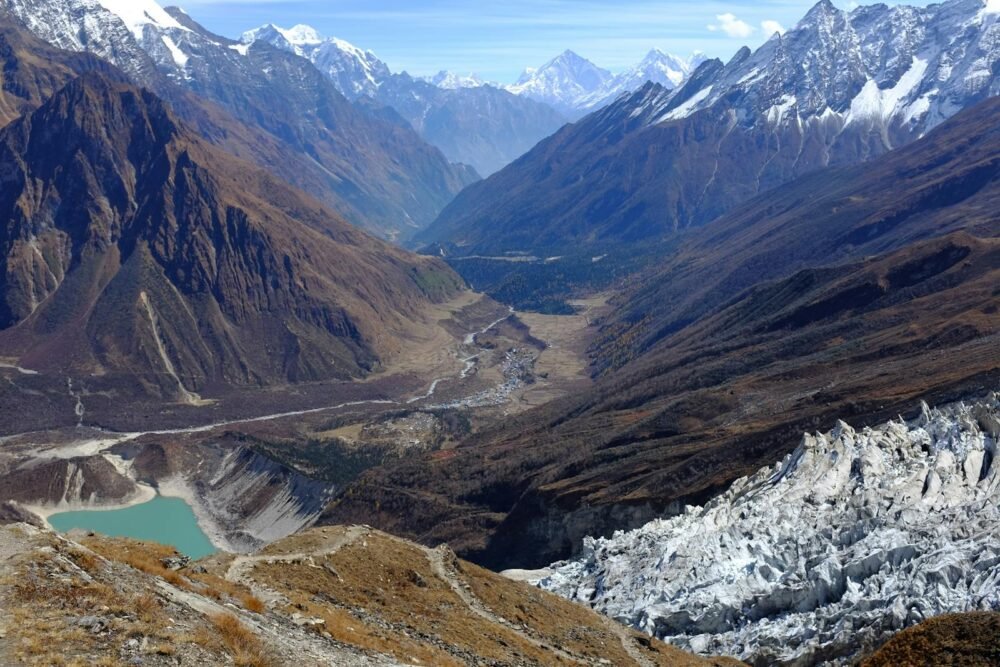
Everything about the Warwan Valley Trek announces itself as a different order of undertaking from the other routes in this guide. At 84.5 kilometres over 9 days, with a maximum altitude of 14,495 feet, this is the trek for people who have done the Great Lakes, the Nafran, or comparable routes elsewhere in the Himalayas and are explicitly looking for something harder and more remote. The Warwan Valley sits on the eastern side of the Pir Panjal range, accessible only through high passes from the Kashmir Valley side — there is no road that connects the valley to the outside world for most of its length. Once you cross the first pass on day two, you are committed: there is no quick exit, no mobile signal, and no possibility of vehicle evacuation from most of the route.
This extreme remoteness is precisely what makes Warwan so compelling for serious trekkers. The valley has been inhabited for centuries by agropastoral communities who are, in the most literal sense, cut off from the modern economy for six to eight months of every year when the passes are snowbound. The trek passes through several of these villages — Inshan, Sukhnai, Humpet — where the welcome is warm and the way of life genuinely startling in its self-sufficiency. The Bakarwal nomadic herders are present on the higher sections of the trail throughout July and August, with their enormous flocks of Merino-crossbred sheep and their traditional black tents. The combination of dramatic topography — four major pass crossings, two river gorges, and one long high-altitude ridgeline traverse — with this living human landscape makes Warwan one of the most complete trekking experiences anywhere in the western Himalayas.
At ₹20,150 per person, the Warwan Valley Trek is comparable in price to the Great Lakes route but demands significantly more in physical preparation. Trekkers should be experienced multi-day Himalayan walkers with good fitness, high-altitude experience (ideally above 14,000 ft previously), and a genuine tolerance for sustained physical effort. The best season is July and August — the window is shorter than for other routes because the entry and exit passes can be snowed in at either end of the trekking season. Trek in Kashmir operates Warwan with small groups (typically 6–10 trekkers) for logistical reasons and to minimise environmental impact in a valley that sees very little organised trekking pressure. If you have done the Kashmir Great Lakes Trek and are ready for the next level, Warwan is your route.
How to Choose the Right Kashmir Trek for You
First-time trekkers — whether completely new to the Himalayas or new to multi-day trekking — should start with the Tulian Lake Trek. The 5-day duration limits cumulative fatigue, the maximum altitude of 12,087 feet is manageable with gradual acclimatisation, and the daily distances are short enough to leave time for rest. If you have some hill-walking experience but have not done a multi-day Himalayan trek, Tulian Lake also works well. The Gurez Valley Trek is also accessible to motivated beginners who are comfortable with moderate fitness challenges, though the cultural complexity of the route means having a knowledgeable guide (which all Trek in Kashmir packages include) is especially important.
Intermediate trekkers — those who have completed at least one multi-day trek, ideally at some altitude — have the most options in Kashmir. The Nafran Valley Trek is the natural step up from an easy-to-moderate introduction, with its Kolahai Glacier destination and Harnag Pass crossing providing genuine challenge within a manageable 7-day structure. The Kashmir Great Lakes Trek is also within reach for a fit intermediate trekker, though its 8-day duration and multi-pass structure mean you should be honest with yourself about your fitness level. Consider the Great Lakes if you are motivated by visual drama and scenic diversity; consider Nafran if you prefer a more focused wilderness experience with a specific landmark destination.
Advanced trekkers looking for the best Kashmir has to offer at the upper end of difficulty have only one answer: the Warwan Valley Trek. There is no substitute for its combination of distance, altitude, remoteness, and cultural depth. In terms of fitness requirements, you should be able to walk 10–14 km per day on mountain terrain with a daypack (horses carry the main gear), sustain this over 9 consecutive days, and remain comfortable at altitudes above 13,000 feet for extended periods. Age is not a barrier in itself — Trek in Kashmir has completed Warwan with trekkers in their 50s who were in excellent condition — but honest fitness assessment is essential for this route.
Kashmir Trekking Season — When to Go
| Month | Conditions | Crowd Level | Recommended Treks |
|---|---|---|---|
| June | Snow may still cover high passes; wildflowers at peak in lower meadows; cool nights | Low | Tulian Lake, Gurez Valley (lower sections), Nafran (lower camps) |
| July | Most passes clear; rivers high from snowmelt; warm days, cold nights; full meadows | Moderate | All 5 treks operational; Great Lakes and Warwan recommended this month |
| August | Peak season; warmest temperatures; occasional afternoon showers; all routes fully open | High | All 5 treks; busiest period for Great Lakes |
| September | Crowds drop sharply after mid-month; skies exceptionally clear; temperatures fall at night | Low–Moderate | Excellent for all treks; best photography conditions; avoid late September for high passes |
| October | Most high routes closing; early snowfall possible above 12,000 ft; not recommended | Very Low | Only lower-altitude day hikes; organised treks not advised |
Frequently Asked Questions About Trekking in Kashmir
Are Kashmir treks safe?
Kashmir treks operated by registered, experienced companies like Trek in Kashmir are safe for prepared trekkers. The region’s high-altitude trails require physical fitness, proper gear, and a reliable guide team — all of which Trek in Kashmir provides. Security conditions in the Pahalgam, Sonamarg, and Srinagar belt have been stable for trekking tourism throughout the season. Permits, check-post registrations, and guide protocols add additional safety layers. Trek in Kashmir maintains emergency communication equipment on all expeditions and has clear evacuation procedures in place.
What fitness level do I need for Kashmir treks?
Fitness requirements vary by route. For the Tulian Lake Trek (easy to moderate), basic cardiovascular fitness from regular walking or gym workouts is sufficient. The Nafran Valley and Gurez Valley treks require good stamina and prior hiking experience. The Kashmir Great Lakes Trek and Warwan Valley Trek demand serious fitness — the equivalent of being able to walk 10–15 km per day consecutively over hilly terrain. Start training 8–12 weeks before your trek with daily walks, stair climbs, and weight-bearing exercise.
Do I need a guide for Kashmir treks?
Yes — a registered guide is both a legal requirement and a genuine safety necessity on all multi-day Kashmir treks. The terrain is remote, trails are not always clearly marked, river crossings can be hazardous, and altitude sickness requires an experienced eye to recognise early. Trek in Kashmir provides certified, trained trek leaders and local guides who know the terrain intimately. Going independently on Kashmir’s high-altitude routes is not advisable and may not be permitted at certain check posts.
What is the cheapest trek in Kashmir?
The Tulian Lake Trek, starting from ₹12,150 per person, is the most affordable guided multi-day trek offered by Trek in Kashmir. It covers 26 km over 5 days, reaching the stunning iceberg-dotted Tulian Lake at 12,087 ft from Pahalgam — outstanding value for a genuinely high-altitude Himalayan experience with full guiding, camping, and meals included.
Can beginners do the Kashmir Great Lakes Trek?
The Kashmir Great Lakes Trek is rated moderate to difficult and is not ideal as a first-ever trek. It spans 74.8 km over 8 days, crosses three passes above 13,000 ft, and involves sustained high-altitude camping. However, beginners with very good cardiovascular fitness who have completed at least two or three shorter day hikes and who are committed to preparation (training for 10–12 weeks beforehand, discussing Diamox with their doctor) can complete it with Trek in Kashmir’s professional support. It is significantly more challenging than it appears on paper.
Book Your Kashmir Trek with Trek in Kashmir
Trek in Kashmir has been organising high-altitude treks across the Kashmir Valley for years, with a team of local guides whose cumulative experience on these trails spans decades. Every person who leads a Trek in Kashmir group grew up in Kashmir, has crossed these passes dozens of times, and knows the landscape with the kind of granular, seasonal knowledge that no amount of GPS data or guidebook research can replicate. When you book a Warwan Valley departure or a Great Lakes traverse with us, you are not booking a generic mountain holiday — you are engaging with people for whom these routes are home terrain, who know which campsite has the best water source in a dry July, which approach line to Harnag Pass avoids the worst scree, and where the Bakarwal families are most likely to be camped in the second week of August.
All Trek in Kashmir packages are genuinely all-inclusive within the trek: meals (breakfast, lunch, and a hot dinner each day), quality camping tents and sleeping bag liners, an experienced lead guide and assistant guide, horsemen and ponies for main gear transport, all relevant permits and entry fees, and a comprehensive first-aid kit with supplemental oxygen on the more demanding routes. What you carry on the trail is your daypack — water, camera, layers, and personal items. Transport from Srinagar to the trailhead and return can be arranged at additional cost. To ask questions about any of these routes, check upcoming departure dates, or book your Kashmir trek for 2026, contact us directly through the Trek in Kashmir website. We keep group sizes small — typically 6 to 12 trekkers — to ensure that the guides can give each trekker genuine attention and that the environmental footprint on these sensitive alpine ecosystems stays minimal.